Catering Equipment Checklist for Buffet and Off Site Events in the Philippines
For professional caterers, hotel banquet teams, restaurant groups, commissaries, and procurement teams, building an event equipment package is rarely about finding one missing item. The more important question is whether the complete setup supports the actual service format from loading and transport through buffet presentation, replenishment, beverage service, clearing, and pack down.
A useful catering equipment checklist should therefore do more than list products. It should help the buying team confirm which equipment groups are required, what needs to work together, and what information a supplier needs before preparing a quotation.
COMCOM carries commercial catering supplies across buffet food stations, beverage stations, catering transport, and waiter service. These categories can be combined according to the requirements of each hotel, restaurant, catering company, commissary, or institutional foodservice project.
1. Start With the Service Requirement, Not the Product List
Experienced foodservice teams usually already know the core equipment used in their operation. The sourcing challenge is making sure the package fits the particular event, venue, menu, and service plan.
Before finalizing an order, it is useful to confirm:
The type of service, such as buffet, banquet, corporate event, catered function, or other format
The number and type of food and beverage stations
The menu categories that require holding, serving, or transport equipment
What equipment is already available at the venue or commissary
How equipment will be transported, unloaded, moved, and stored
Any preferred equipment format that needs to match an existing setup
The quantities that need to be quoted
This gives the supplier a clearer basis for recommending categories and helps the purchasing team avoid building the requirement one item at a time without seeing the full service flow.
2. Buffet Food Station Equipment
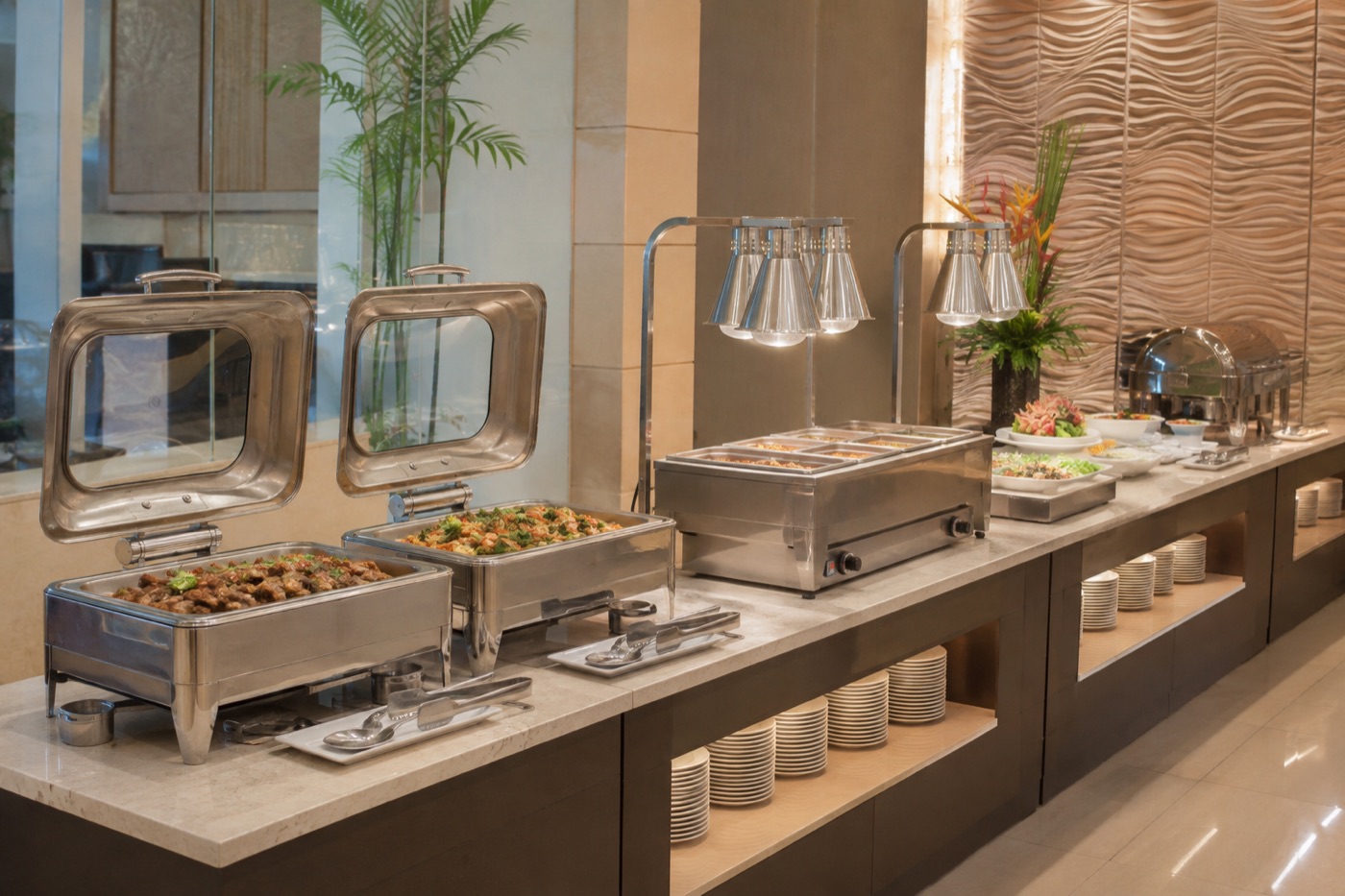
For buffet service, the equipment package typically starts with holding and presentation. The exact configuration depends on the menu, service format, number of stations, and the equipment already in use.
COMCOM’s buffet food station equipment includes several product groups that can be considered when planning a buffet package.
Chafing Dishes and Food Holding
Chafing dishes are one part of the buffet system rather than the entire setup. Buyers may need to coordinate the selected format with food pans, heating accessories, service layout, and the way the station will be replenished.
COMCOM currently carries several chafing dish formats. One current example is the round induction chafing dish. The right option should be reviewed against the actual project requirement and any existing equipment that needs to be matched.
Food pans and buffet components should be reviewed as part of the same package. If the operation already uses specific pans or holding equipment, compatibility should be confirmed before ordering replacements or additional pieces.
The current Catering Supplies range includes solid and perforated steam table pans along with other buffet station items. Pan sizes, quantities, and configuration will vary according to the operation.
Specialty Buffet Stations
Some buffet operations may also require equipment for soup, breakfast, cereal, or beverage service. The requirement should be based on the menu and station plan rather than on a standard list that applies to every event.
Where applicable, flame gel for buffet service is also available within the current COMCOM range. The exact compatibility of any heating accessory should be confirmed for the selected equipment before use.
3. Beverage Station Equipment
Beverage service often needs to be planned separately from the food line because it has its own service, replenishment, and transport requirements.
COMCOM’s beverage station equipment includes current options such as a coffee urn, beverage dispensers, water service items, and insulated beverage transport products.
A hotel breakfast operation, conference service, catered event, and mobile beverage station may each require a different combination. Buyers can start by confirming what will be served, whether beverages are prepared at the venue or transported, how many service points are required, and what equipment is already available.
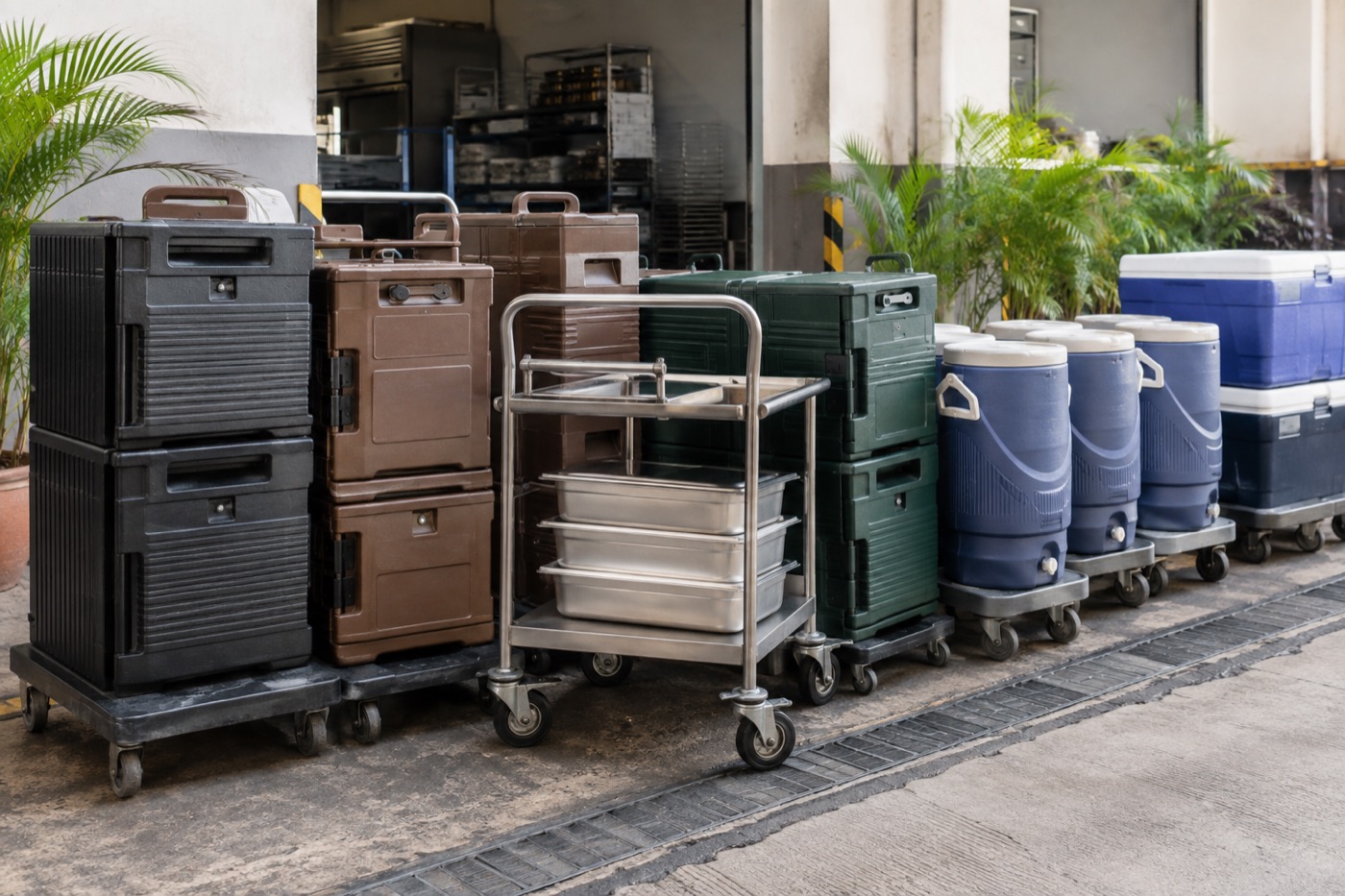
For operations that need insulated beverage transport, an insulated beverage carrier can be considered as part of the wider catering transport plan.
4. Catering Transport and Handling
For off site catering, the transport plan is part of the equipment plan.
Food and beverage equipment may need to move from a commissary or kitchen to a loading area, vehicle, venue staging area, and final service station. The products selected for transport should therefore fit the actual movement of the operation.
When reviewing transport requirements, procurement teams can consider:
What food or beverage items need to be transported
Whether the equipment must also support holding or staging
The distance between unloading and the final service area
How many trips or service points the team needs to support
The size and access conditions of the venue
What equipment needs to return to the commissary after service
The purpose of this review is not to prescribe one transport method. It is to help ensure the equipment being sourced fits the actual route from kitchen to service and back again.
5. Waiter and Service Equipment
Front of house equipment is easy to separate from the kitchen purchasing list, but it still affects the complete service package.
COMCOM’s waiter service equipment includes current items such as service trays, bus trays, and service carts. A bus tray can support clearing and movement requirements depending on the service setup.
The right combination will depend on the number of service stations, the clearing workflow, the type of table service, and how the team moves used and clean service items through the venue.
For this reason, waiter service items are best reviewed alongside the buffet and transport requirement rather than added as an afterthought after the main equipment package is already finalized.
6. Check the Venue and Setup Requirements Before Finalizing the Package
Even when the menu and service format are familiar, venue conditions can change the equipment requirement.
Before the quotation is finalized, the buyer may need to confirm practical details such as:
Where unloading will take place
How far equipment needs to be moved to the service area
Whether elevators, stairs, narrow access points, or long corridors affect handling
The number and position of buffet and beverage stations
Which tables, counters, utilities, or service equipment are already available at the venue
Which items must be supplied by the catering or hotel team
Whether any new equipment needs to match an existing format
These details make the quotation discussion more useful because the supplier can understand the complete requirement rather than only receiving a list of product names.
7. What to Include in a Catering Equipment Quotation Request
A clear quotation request can make it easier for the supplier to identify relevant categories and ask the right follow up questions.
When contacting COMCOM, purchasing teams can provide the information they already have available, such as:
Service or event format
Menu or food station requirements
Expected quantities
Number of buffet, beverage, or service stations
Venue and setup considerations
Transport and handling requirements
Preferred equipment formats
Existing equipment that the new items need to match
Product names or SKUs already identified from the COMCOM catalog or website
There is no need to have every specification finalized before starting the discussion. A sourcing conversation can begin with the operational requirement and narrow the product options from there.
8. Build a Coordinated Catering Equipment Package
For established foodservice teams, the value of a catering equipment checklist is not the number of items on the page. It is the ability to see whether the buffet, beverage, transport, handling, and waiter service requirements have been considered together.
A hotel may be reviewing equipment for a banquet or breakfast buffet. A catering company may need a package that moves between venues. A restaurant group may be expanding event service. A commissary may be supporting multiple service points. Each operation can require a different mix of equipment even when the product categories look similar.
COMCOM’s Catering Supplies range gives professional buyers one place to review buffet, beverage, transport, and service equipment. The team can help identify suitable product categories based on the actual requirement and prepare a quotation for the items being considered.
Planning a buffet, banquet, catering, or event service requirement? Send COMCOM your service format, expected quantities, venue setup, transport needs, and preferred equipment categories to request a quotation.
We use cookies on our website to give you the most relevant experience by remembering your preferences and repeat visits. By clicking “Accept All”, you consent to the use of ALL the cookies.
This website uses cookies to improve your experience while you navigate through the website. Out of these, the cookies that are categorized as necessary are stored on your browser as they are essential for the working of basic functionalities of the website. We also use third-party cookies that help us analyze and understand how you use this website. These cookies will be stored in your browser only with your consent. You also have the option to opt-out of these cookies. But opting out of some of these cookies may affect your browsing experience.
Necessary cookies are absolutely essential for the website to function properly. This category only includes cookies that ensures basic functionalities and security features of the website. These cookies do not store any personal information.
Any cookies that may not be particularly necessary for the website to function and is used specifically to collect user personal data via analytics, ads, other embedded contents are termed as non-necessary cookies. It is mandatory to procure user consent prior to running these cookies on your website.